

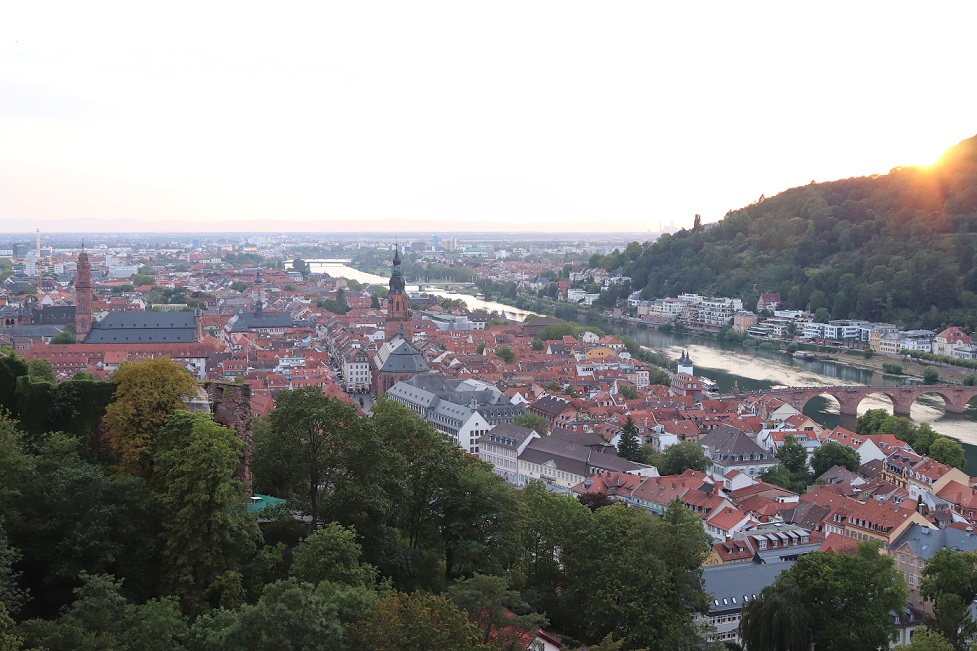
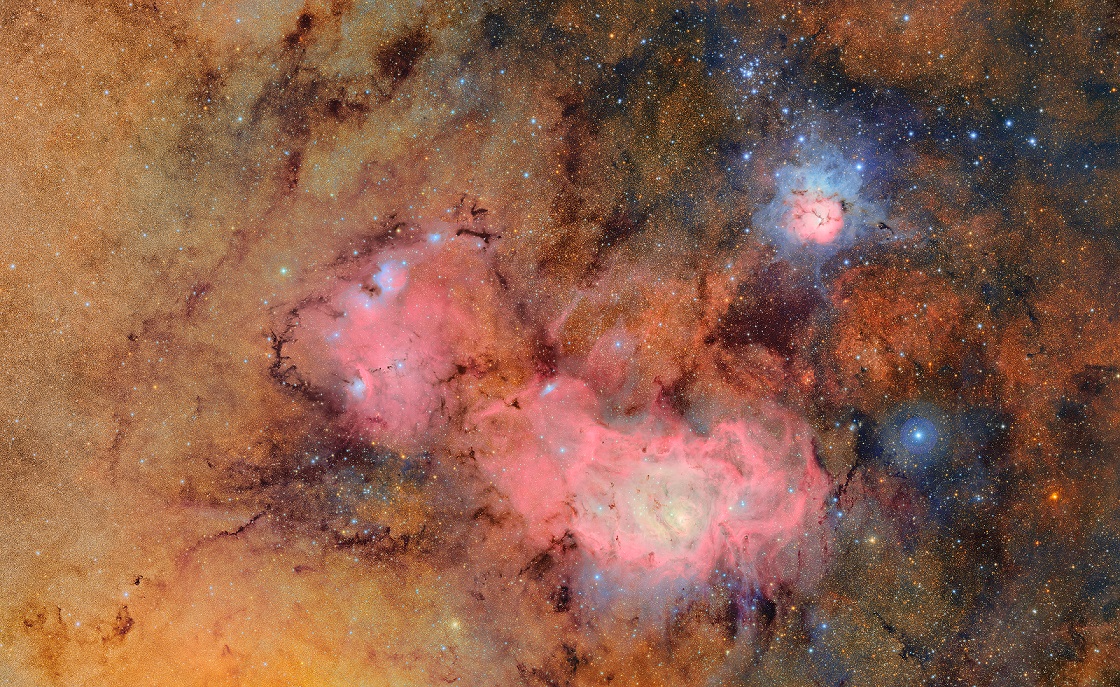

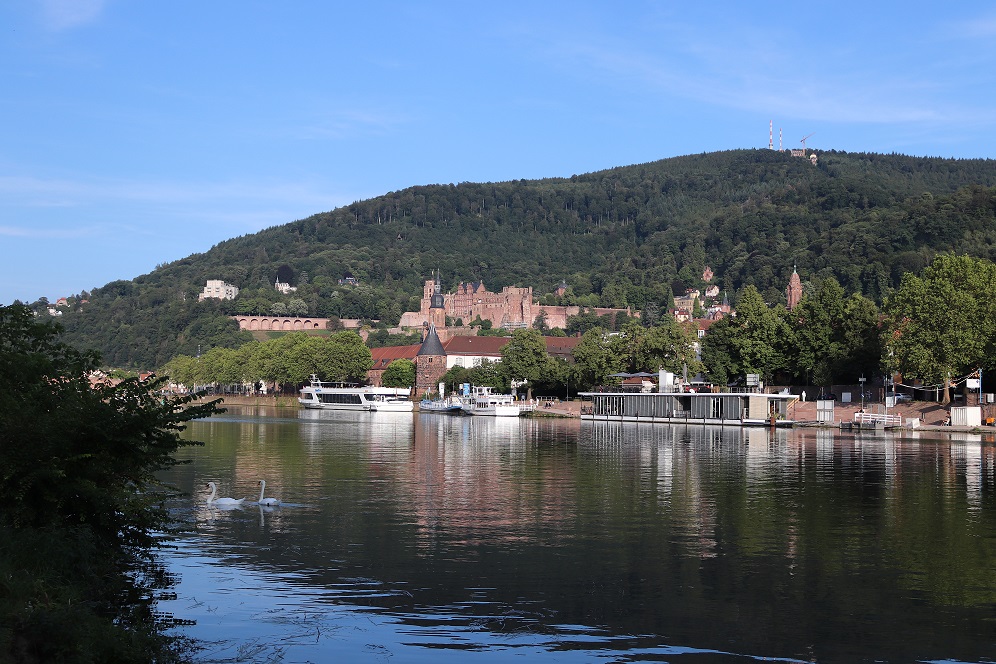
We are pleased to announce the upcoming conference Microlensing 2026, which will take place for the first time ever in Heidelberg, Germany, from 23 February until 27 February 2026.
Gravitational microlensing is a powerful astronomical technique that enables the detection of objects that would otherwise be difficult or impossible to observe. These include isolated black holes, exoplanets and unbound planets, as well as, in the near future, exomoons. By analyzing microlensing event statistics, we can improve our understanding of stellar populations in our Milky Way and beyond.
In recent years, studies have shown that combining time-series photometry from space and from the ground can increase sensitivity and reveal stellar remnants and potential planetary companions. The Vera C. Rubin Observatory’s Legacy Survey of Space and Time (LSST), set to begin at the end of 2025, will offer a, quite literally, deeper look at microlenses, including those near the galactic center and disk. The Nancy Grace Roman Space Telescope will revolutionize the discovery of microlensing exoplanets with its wide-field instrument, significantly expanding our knowledge of their formation and migration of rocky exoplanets.
VLTI observations promise to provide a comprehensive census of stellar remnants, including black holes, neutron stars and white dwarfs. The upcoming Gaia data release, DR4, will reveal more astrometric microlensing. However, analyzing the vast amounts of time-series photometry, astrometry and spectroscopic data requires innovative and machine learning techniques in order to identify rare events.
Machine learning is a crucial component of artificial intelligence. Technological improvements, starting with the leap in data processing of the first microlensing surveys involving difference imaging analysis and large-format cameras, have led to the advances of recent decades. We look forward to seeing new interdisciplinary and innovative approaches that will enhance our ability to identify microlenses, to even discover new types of microlenses and analyze their properties.
Topics
Methods: Astrometry, Interferometry, Polarimetry, Spectroscopy, Photometry
Populations: Exoplanets, Exomoons, Stellar Remnants, Unbound Planets, Binaries and more
Ground-based Facilities & Space Missions: ELT, Earth 2.0 (ET), Euclid, Gaia, KMTNet, MOA, OGLE, PRIME, Roman, Rubin, VLT and more
Statistical Approaches & Numerical Tools
Extragalactic Microlensing (Quasar Microlensing)
New Results & Innovative Concepts

Conference Poster (Download here)
LOC
Markus Hundertmark (Co-Chair)
Zofia Kaczmarek
Robert Schmidt
Guido Thimm
Yiannis Tsapras
Joachim Wambsganss (Co-Chair)
SOC
Etienne Bachelet (Université Marie et Louis Pasteur, Besançon)
David Bennett (NASA/GSFC and University of Maryland)
David Buckley (SAAO, Cape Town)
Arnaud Cassan (Sorbonne Université, Paris)
Markus Hundertmark (Heidelberg University)
Macy Huston (UC Berkeley)
Zofia Kaczmarek (Heidelberg University)
Eamonn Kerins (University of Manchester)
Somayeh Khakpash (Lehigh University, Bethlehem)
Shude Mao (Westlake University, Hangzhou)
Radek Poleski (University of Warsaw)
Nicholas Rattenbury (University of Auckland)
Rachel Street (Las Cumbres Observatory, Goleta)
Takahiro Sumi (Osaka University)
Joachim Wambsganss (Heidelberg University)
Weicheng Zang (Harvard-Smithsonian CfA, Cambridge)